
Digital Crowds, Solitary Souls
EGET
Although the notification lights on our smartphones never go out these days, silence reigns in the inner world of many of us. Ironically, in an era when we are most interconnected, social isolation is spreading like a silent pandemic. However, there is a biological and spiritual formula for breaking this cycle, beyond simply "engaging in activities": healing together.
The field of "Geriatrics," whose foundations were laid by the EGET Foundation, aims to be a balm for this very wound. So, what changes does volunteering under the umbrella of a foundation or participating in its projects bring to our minds and souls?
1. Ecological Farming and "Soil-Based" Therapy
Being in the field or involved in agricultural projects is not just a "farming" activity. Contact with the soil allows us to interact with bacteria scientifically known as Mycobacterium vaccae, which increase serotonin (the happiness hormone). For the modern city dweller, supporting an ecological farming project is about managing anxiety by aligning with the rhythm of nature.
2. Geriatrics and Intergenerational Bridge
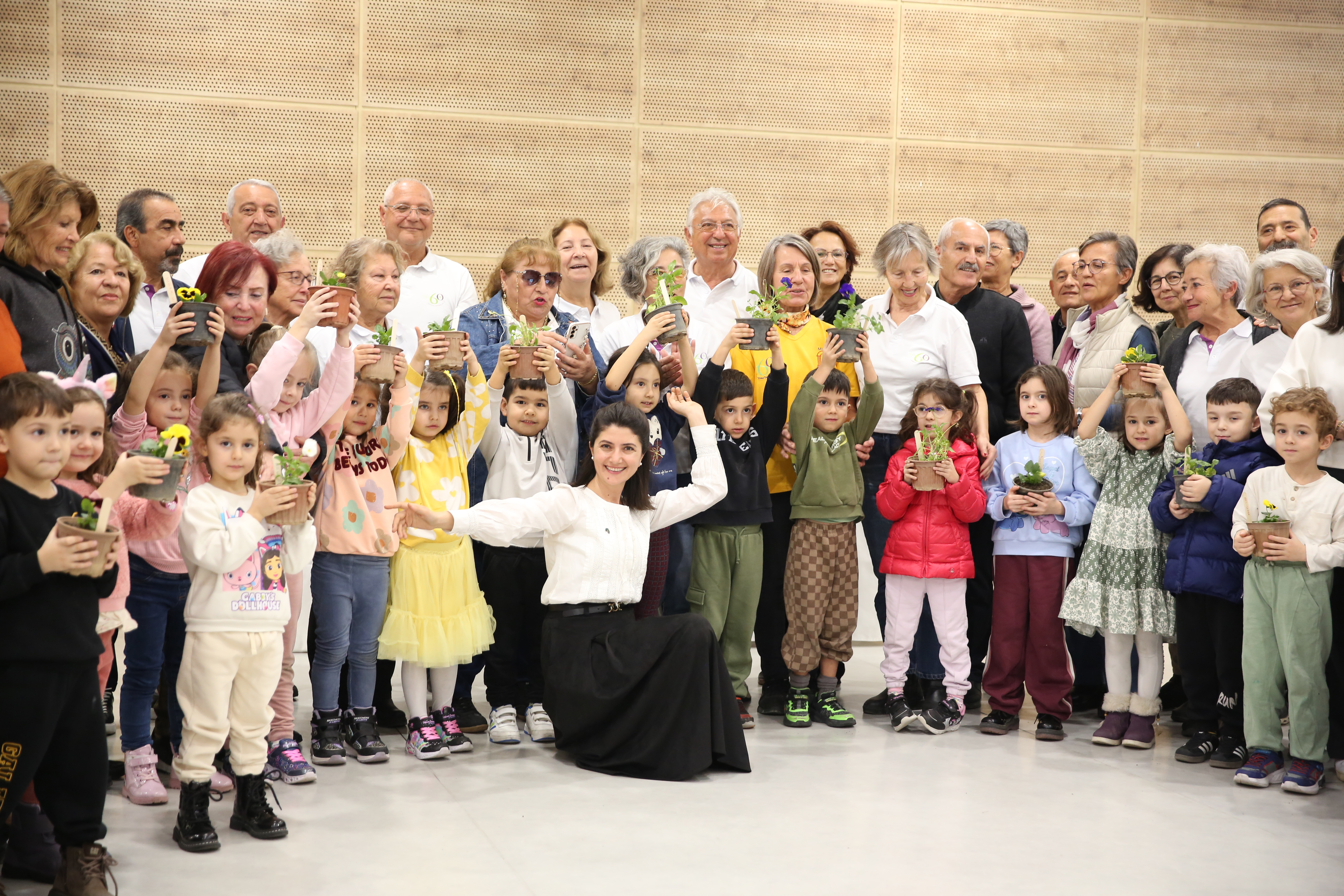
A young fellow and an experienced elder working side-by-side on the same project is more than just a transfer of knowledge.
* For young people: An inner calm and perspective gained from life experience.
* For older people: A sense of "meaning and purpose" renewed by the energy of youth.
This bond is the strongest armor protecting cognitive functions.
3. Connecting to the Future Through Education
Contributing to a student's education allows one to serve "a purpose greater than oneself." Harvard University's famous 80-year study has proven that what makes us happiest is not money or career, but quality relationships and social benefit.
References and Further Reading
* EGET Foundation (Education, Geriatrics, Ecological Agriculture): The foundation's work on geriatrics and ecological agriculture models.
* Holt-Lunstad, J., et al. (2015): Social Isolation and Loneliness as Risk Factors for Mortality. Perspectives on Psychological Science.
* Waldinger, R. (2016): The Good Life: Lessons from the World's Longest Scientific Study of Happiness. (Director of the Harvard Study of Adult Development).
* Cacioppo, J. T., & Patrick, W. (2008): Loneliness: Human Nature and the Need for Social Connection.
Absolutely. According to Julianne Holt-Lunstad's research, the harm to health from chronic loneliness is equivalent to smoking 15 cigarettes a day. It weakens the immune system and accelerates inflammatory processes.
No. Within organizations like the EGET Foundation, sometimes it's enough to contribute your handiwork at a lavender harvest, sometimes to mentor a student, and sometimes simply to offer an idea for a social project. The important thing is "intention" and a sense of "belonging."
No, it's also neurological. When we belong to a community, the reward centers in our brains release dopamine, and the level of cortisol, the stress hormone, is balanced.